A Designer's Look at the I Survived School Days Design
First Impressions: A Bold and Nostalgic Mood
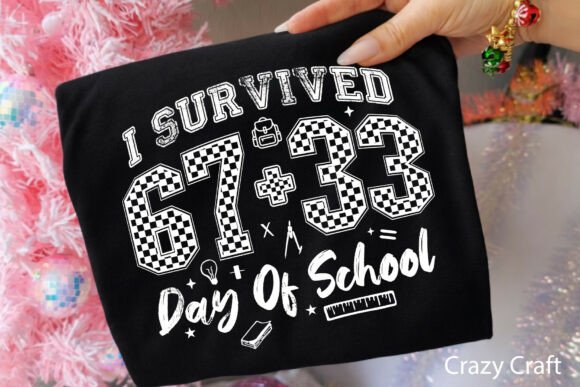
When you first open the I Survived 67 33 Days of School embroidery design, its personality is immediately clear. The bold, checkerboard-themed graphic, paired with the quirky "67" and "Six Seven" memo text, creates a nostalgic, celebratory mood. It’s playful but also surprisingly classic. As a designer, I’m drawn to layouts that tell a story, and this one taps directly into that universal school milestone feeling—whether it’s for a student, a teacher, or a parent remembering the journey. The design feels less like a simple slogan and more like a visual trophy, which makes it inherently versatile for embroidery.
Where This Design Finds Its Perfect Home
In my studio, I always think about where a design will truly shine. For I Survived 67 33 Days of School, I envision it on custom apparel like hoodies and t-shirts for students, but its charm extends far beyond that. Imagine embroidering this onto a sturdy canvas tote bag for a teacher—a unique, practical gift they’ll use daily. For baby items or kid’s jackets, it becomes a fun, personalized celebration patch. I’ve considered it for a whimsical kitchen towel or apron for a parent marking the homeschool milestone. In a boutique setting, this design could anchor a small line of "school survival" merchandise: pillows, blankets, or even decorative patches for backpacks. Its bold, graphic nature means it scales well for larger items like posters for a classroom, but its core strength lies in wearable, personal products.
A Real Project Scenario: The Custom Sweatshirt
Picture this: a client requests a custom embroidered sweatshirt for their child who just finished a significant school stretch. I load the I Survived 67 33 Days of School file. The checkered background and clear lettering promise good stitch definition. On a mid-weight cotton sweatshirt, using a contrasting thread palette, the design would pop with authority. The "meme" style lends a contemporary, relatable edge that a teenager would actually want to wear, not just a generic celebratory text. This is key for commercial appeal—it feels authentic.
Performance on the Machine and the Fabric
In practical embroidery terms, the success of a graphic like this hinges on clarity. The checkered pattern and the "67" numerals will rely on clean satin stitches or fill stitches to maintain their graphic punch. On textured fabrics like a fleece-lined hoodie, you’ll need proper stabilizer to keep those squares sharp. For thin or stretchy fabrics, like a standard t-shirt, testing stitch density on scrap fabric first is non-negotiable to prevent puckering. The design’s strength is its relatively open layout; there aren’t overly dense areas that would bog down a smaller machine, making it suitable for a range of hoop sizes.
However, caution is needed on very small items. Embroidering this on a curved surface like a cap requires careful positioning to ensure the text doesn’t distort. On dark fabrics, thread color contrast is paramount—bright, opaque whites or vibrant colors will be essential to maintain the design’s playful, lighthearted feel. And for products destined for frequent washing, like a child’s sweatshirt, securing those stitches with quality thread and proper technique will ensure the "survival" message lasts as long as the garment.
Design Details That Build Trust and Value
From a business perspective, using a well-executed design like this elevates your finished product. When a customer sees crisp, clean embroidery of a relatable, fun design on a handmade tote or custom apparel, it builds immediate trust in your craftsmanship. It shows you’ve chosen a design with visual personality, not just a template. For Etsy sellers or craft fair vendors, this design can become a staple for seasonal listings—perfect for back-to-school or end-of-year gift markets. Its inherent "giftability" is high: it’s personal, celebratory, and lighthearted.
For digital product sellers offering the file itself, the design’s versatility is a major selling point. It’s clearly a graphics file meant for a wide variety of items, from vertical posters to t-shirt designs. When creating printable mockups for your shop, showcasing it on different products—a pillow cover, an apron, a baby bib—demonstrates its commercial potential and helps buyers visualize its use.
Practical Notes for the Embroidery Designer
Before you stitch this for a client or your own shop, here are my grounded, professional notes. Always, always test the I Survived 67 33 Days of School design on a scrap of your target fabric. Check how the small details, particularly the numbers and any fine lines in the checkerboard, render with your chosen thread and stabilizer combination. Review the stitch count and density if the file provides that data; if not, a test run will reveal it.
Create black and white mockups, or stitch a sample on both light and dark background scraps. This will inform your thread color decisions for different projects. Confirm the licensing terms for this embroidery file before selling finished items or incorporating it into commercial projects for your craft business. Understanding whether it’s for personal use, commercial embroidery, or both is a fundamental step for any professional.
Finally, trust your eye. This design has a strong visual identity. Pair it with fabrics that complement its boldness—classic cotton, sturdy canvas, cozy fleece. Avoid overly busy or textured fabrics that might fight with the checkered pattern. When stitched well, I Survived 67 33 Days of School becomes more than a meme; it becomes a durable, charming emblem of a shared experience, perfect for the handmade market.