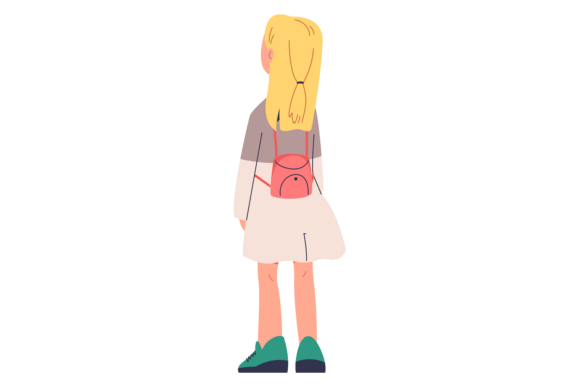
A Practical Review of the Cute Girl Rear View Design
When a new embroidery design lands in my library, my first question isn't about its technical specs. It's about how it will feel when it’s stitched out, sitting on a finished product. The Cute Girl Rear View. School Kid Standing graphic arrives with a simple, charming premise. Here’s my take on its real-world potential for your projects.
The Quiet Charm of a Simple Back View
This illustration immediately sets a mood. It’s nostalgic, gentle, and universal. The rear view perspective creates a sense of innocence and movement—a child heading off to learn or play. The isolated, clean outline means it's a graphic ready for work, not just a pretty picture. For embroidery, this is a strong starting point: a clear shape without overly fussy internal details. That translates to good stitch clarity, especially for smaller applications like a baby’s romper or a delicate corner of a pillow cover.
Its personality is understated. It won’t dominate a garment but will add a spot of heartfelt decoration. I envision it on items meant for quiet appreciation: a personalized gift for a parent, a kitchen towel in a family home, or a nursery decor item. It doesn’t scream; it whispers. That’s a valuable trait for many craft business products where the aesthetic needs to be welcoming but not overwhelming.
Where This Design Finds Its Perfect Home
Let’s talk application. I’m mentally stitching this onto different surfaces as I review it. The clean lines suggest it will perform beautifully on custom apparel like sweatshirts and t-shirts, provided the fabric is stable. A mid-weight cotton tote bag would be an ideal canvas. The design’s theme lends itself perfectly to back-to-school merchandise, teacher appreciation gifts, or child-centric boutique products.
Consider a real scenario: You’re preparing a limited run of embroidered patches for a local craft fair. The Cute Girl Rear View design, rendered in crisp satin stitch outlines and a few fill stitch details for the hair and shoes, becomes a ready-made patch for scrapbooks, jackets, or backpacks. Its isolated nature means no background cleanup is needed—the transparent PNG file is crucial here. For digital product sellers, this makes creating printable mockups for your Etsy listings straightforward.
Other strong fits include aprons, simple pillow covers, and lightweight baby blankets. On holiday gifts like a grandmother’s handkerchief or a wedding gift for a new family, it adds a touch of personalized warmth without being too specific.
Spots Where You Should Proceed with Care
No design is universally perfect. Here’s where I’d be cautious. The design likely has some fine details—the lines of the hair, the edges of the schoolbag. On highly textured fabrics like a thick sweater or a curved surface like a cap, those details could lose definition. If the stitch density in the file is high for small areas, it might be too dense for thin or stretchy fabric without excellent stabilizer.
Embroidering it onto dark fabric requires careful thread color contrast planning. A white or light yellow outline might vanish against navy. Always test. Also, because the mood is soft, I wouldn’t force it onto products that demand boldness, like a sporty team cap. Its scale matters: shrink it too small for a tiny hoop, and you risk losing the recognizability of the school kid figure. Enlarge it too much for a sweatshirt back, and the simple shape might feel sparse. Finding its natural size is key.
How This Graphic Influences Your Product’s Value
From a business perspective, using a design like this well can enhance your customer trust and your product’s giftability. It’s easily recognizable and emotionally resonant. A client seeing this on a handmade product understands the intent immediately—it speaks of family, growth, and care. That connection builds brand consistency for a shop specializing in heartfelt goods.
For apparel decorators or small shop owners, the professional execution of this machine embroidery design—clean stitches, no puckering, smart color choices—will make the finished item feel premium. It turns a simple graphic into a thoughtful finished product. The commercial appeal is there for craft fair products and Etsy listings because it fills a niche need for customizable, non-generic children’s themes.
A Designer’s Practical Checklist Before You Hoop It
Before you commit this to a client’s project or your own inventory, do this:
- Test on scrap fabric first, using the same material and weight as your final product.
- Check how the provided file formats—EPS, JPG, SVG, PNG—work with your software. The SVG and transparent PNG are particularly valuable for previews and adjustments.
- Review the stitch out in a black and white mockup to judge contrast.
- Compare how it looks on both light and dark fabric backgrounds in your software simulator.
- Confirm the necessary hoop size and ensure your stabilizer choice matches the fabric.
- Inspect the small details in the design file: are there any tiny corners or lines that might need a stitch type adjustment?
- Most importantly, confirm the licensing for this graphic. Can it be used for personal and commercial projects? If you’re selling the finished items or including it in a digital product, clear licensing is mandatory.
Remember, a design file is a blueprint. The embroidered patch or sweatshirt embroidery you create is the real building. The Cute Girl Rear View. School Kid Standing design provides a solid, emotionally smart foundation. Its success hinges on your skill in pairing it with the right fabric, thread, and purpose. It’s not a flashy design, but in the right context, on the right product, stitched with care, it will quietly impress your customers and add genuine value to your craft.