Vector Line Art Apples and School Icons Review
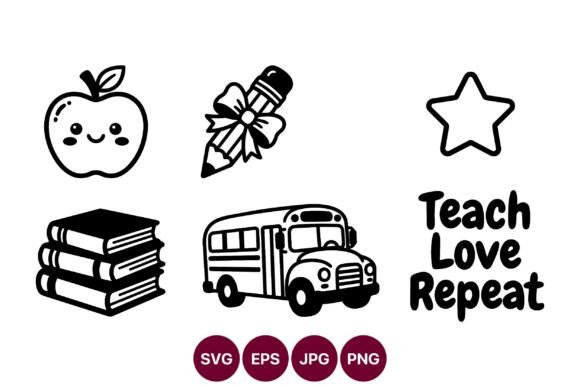
I opened the ZIP folder for Vector Line Art Apples and School Icons on a Tuesday morning, coffee in hand, already thinking about a custom tote bag order I had sitting on my workbench. A local teacher had reached out asking for something she could carry to school every day. Not too flashy, not too cutesy. Just clean, meaningful, and professional. This design caught my attention immediately because it sits in that sweet spot between playful and polished. The black and white line art composition brings together an apple, a pencil, a star, a stack of books, a school bus, and the phrase teach love repeat. It feels like a quiet homage to the classroom, the kind of artwork that resonates with educators without screaming for attention.
As an embroidery designer who has tested hundreds of digital files over the years, I look at a design like this and immediately start asking the practical questions. How will those lines translate into thread? Will the lettering hold up at smaller sizes? Does the composition breathe enough to avoid turning into a dense, puckered mess on a sweatshirt? I have learned through plenty of trial and error that not every pretty graphic makes a good stitch file. The Vector Line Art Apples and School Icons design, however, shows real promise for anyone who understands how to prepare it properly.
First Impressions and the Mood It Creates
The first thing I noticed about Vector Line Art Apples and School Icons was the balance. The apple sits centrally, not too large, not too small, and the surrounding icons radiate outward in a way that feels curated rather than crowded. The pencil, star, stacked books, and tiny school bus each carry their own weight without competing. Then the phrase teach love repeat anchors the bottom, giving the whole composition a sense of purpose. This is not just a random assortment of school supplies thrown together. It reads like a thoughtful tribute to teaching, and that emotional connection matters when you are selling a finished product to someone who pours their heart into their work.
From a design personality standpoint, the line art style gives it a modern, minimalist feel. It reminds me of the kind of artwork you see in boutique teacher gift shops, the ones where a single embroidered pillow cover can sell for forty dollars and actually move off the shelf. The black and white palette keeps it versatile. You are not locked into a specific color story, which means you can adapt it to different fabric backgrounds, thread choices, and product types without the design losing its identity.
Where This Design Truly Belongs
I pictured this design on a natural canvas tote bag first, and honestly, that is where I think it shines brightest. A mid-weight cotton tote with a medium cutaway stabilizer, stitched in a deep charcoal thread or even a rich navy, would let every line breathe. The teacher who ordered from me ended up choosing exactly that, and the result was something she could carry into staff meetings, parent conferences, and grocery runs without feeling like she was wearing a costume. The design made her feel seen, not stereotyped.
Beyond tote bags, I can see Vector Line Art Apples and School Icons working beautifully on a unisex crewneck sweatshirt. Imagine it stitched small on the left chest, or enlarged slightly across the back. The line art style means it does not demand heavy fill stitches, so the garment stays soft and wearable. That matters when you are selling apparel. Customers want something that feels good against the skin, not a stiff patch of thread that makes them sweat. I have also mentally bookmarked this design for kitchen towels, canvas aprons, and simple cotton pillow covers. It fits the teacher appreciation gift niche perfectly, and that niche has a long buying season, from back-to-school all the way through the winter holidays.
Thinking About the Real Stitching Behavior
When I evaluate a design like this for actual embroidery work, I break it down element by element. The apple outline is clean and continuous, which means it should stitch smoothly with a running stitch or a light satin stitch, depending on how you digitize or prepare the file. The pencil is narrow and elongated, which requires careful attention to stitch direction. If you try to cram a satin stitch into a pencil tip that is too thin, you will get thread breaks and frustration. I would recommend testing this design at a minimum width of four inches to preserve those finer details. Anything smaller, and the star might lose its points, the books might blur together, and the lettering could become illegible.
The phrase teach love repeat is the element I scrutinized most closely. Small lettering in embroidery is unforgiving. If the text drops below a quarter inch in height, you are gambling with readability. On a tote bag or sweatshirt, I would aim for lettering that sits at least three-eighths of an inch tall. That gives each character enough room for the thread to form clean serifs or smooth curves without turning into a jagged mess. The good news is that this design gives you the flexibility to scale it, as long as you respect the physical limits of thread and fabric.
Fabric Choices and the Dark Fabric Dilemma
Black and white line art creates an interesting challenge on dark fabrics. If you stitch this design in white thread on a black sweatshirt, the contrast is stunning, but every tiny imperfection becomes visible. Thread tension issues, slight misalignments, and even the fabric texture itself can make the lines look wobbly under high contrast. I recommend testing on a scrap of the exact fabric you plan to use before committing to the final product. On light or natural fabrics, the design is far more forgiving. A soft gray thread on oatmeal linen, for example, creates a subtle, elegant look that hides minor stitching variations beautifully.
Stretchy fabrics like jersey knits or performance wear demand extra caution. The line art style means there is not a lot of dense fill to stabilize the fabric, so you need a reliable cutaway stabilizer and possibly a water-soluble topper to prevent the stitches from sinking into the knit. I learned this lesson the hard way on a baby onesie years ago, and I have never repeated the mistake. A lightweight woven fabric like cotton or linen is simply easier to work with and produces more predictable results. For baby items, I would stick to a soft cotton interlock and keep the design small, perhaps on the chest or the upper back.
Real-Life Scenario: The Boutique Teacher Gift Set
Let me walk you through the project that convinced me of this design's value. I was preparing a coordinated gift set for a boutique client who wanted to launch a teacher appreciation collection. She needed a design that could stretch across multiple products without feeling repetitive. We used Vector Line Art Apples and School Icons on a canvas tote bag, a matching zippered pouch, and a set of simple cotton tea towels. Each product used the same design file but at slightly different scales. The tote carried the design at five inches wide, the pouch at three inches, and the tea towels at four inches with a slightly adjusted thread color to match the kitchen aesthetic.
The collection sold out at her first craft fair. Customers kept picking up the tote bag, reading the phrase teach love repeat aloud, and smiling. That reaction is what separates a generic school design from something that genuinely connects. The line art style felt sophisticated enough that people could gift it to a principal, a veteran teacher, or a student teacher without worrying about it looking childish. It struck the right tone, and that is a rare quality in a market flooded with overly cartoonish or overly sentimental designs.
What to Watch Out For in Production
No design is perfect for every application, and Vector Line Art Apples and School Icons has a few limitations worth noting. Curved surfaces like baseball caps are tricky because the wide, balanced composition does not naturally conform to a curved bill or a structured crown. If you want to use this on headwear, you would likely need to isolate just one element, like the apple or the star, rather than the full composition. The design also requires a hoop size that accommodates its width. A four by four hoop might feel cramped, so I would recommend a five by seven hoop or larger for comfortable placement.
Frequent washing is another consideration. The design's fine lines mean that over time, with repeated laundering, the thread may begin to show wear if the proper stabilizer and stitch density are not used. I always advise using a soft backing and avoiding heavy starch-based stabilizers on items meant for regular use. The goal is a product that looks just as good after a year of Monday mornings as it does on the day it is unwrapped.
Practical Designer Notes for Your Own Projects
If you plan to use Vector Line Art Apples and School Icons in your embroidery business, here are the steps I would take before listing any finished product. First, test the design on a fabric scrap that matches your intended product. Check how the thread lays on the surface, whether the small details like the star points and the pencil tip remain crisp, and whether the lettering reads clearly at your chosen size. Second, experiment with thread color. Black and white is classic, but a deep burgundy, forest green, or even a metallic gold can shift the entire mood of the design and open up new product categories like holiday gifts or wedding presents for teachers.
Third, always confirm your licensing terms before selling finished items or digital products. The ZIP folder includes SVG, PNG, JPG, and EP formats, which gives you flexibility for mockups, digital previews, and printable product listings, but you need to know what the usage rights allow. If you are an Etsy seller or a small shop owner, clear licensing is the difference between a smooth business and a stressful dispute. Do not assume. Verify.
Fourth, consider offering this design as part of a personalized product. Adding a teacher's name or a school name alongside the existing artwork can increase the perceived value significantly. Buyers love personalization, and it helps your listing stand out in a crowded marketplace. Just make sure the added text does not crowd the composition or throw off the visual balance that makes the original design so appealing.
Why This Design Works for Creative Entrepreneurs
As someone who reviews embroidery-friendly graphics regularly, I appreciate designs that give me room to interpret. Vector Line Art Apples and School Icons does not dictate every creative decision. It provides a strong framework and lets me adjust the thread palette, the fabric choice, the product type, and the presentation to fit my brand and my customer base. That adaptability is valuable. It means I can use the same design for a back-to-school launch, a holiday gift guide, and a spring teacher appreciation event without it feeling stale.
The design also photographs well, which matters for online listings and social media. The clean lines and recognizable symbols make it easy to showcase in flat lays, styled mockups, and lifestyle shots. A well-photographed embroidered tote bag with this design can stop a scroll, and in the handmade product world, stopping the scroll is half the battle.
Small Details That Make a Big Difference
I want to highlight a few subtle things about this design that matter in practice. The star is small but distinct, and when stitched correctly, it adds a touch of celebration to the overall composition. The school bus, though tiny, brings a nostalgic quality that resonates with elementary school teachers especially. The stack of books grounds the design with a sense of substance and learning. These elements work together to create a unified story, and stories sell products. A customer buying an embroidered sweatshirt or a handmade patch is not just buying thread on fabric. They are buying a feeling, a memory, an identity. This design delivers that.
For embroidery designers who create their own digitized files, Vector Line Art Apples and School Icons offers a clean starting point. The line art style translates well into a running stitch or a light satin stitch, and the composition is logical enough that you can map out the stitch order without pulling your hair out. For those who prefer to work with pre-digitized embroidery files, make sure you check the stitch count, the color stops, and the recommended hoop size before loading it onto your machine. A quick test stitch on scrap fabric will tell you everything you need to know about how the file performs on your specific equipment.
Final Thoughts From the Workbench
After spending real time with Vector Line Art Apples and School Icons, analyzing it from every practical angle, and putting it through the mental filter of products I actually make and sell, I can say this design earns its place in a working embroidery designer's library. It is not trying to be everything to everyone. It knows what it is: a thoughtful, clean, emotionally resonant piece of line art that connects with educators and the people who appreciate them. That focus is a strength, not a limitation.
Whether you are stitching a single personalized gift for a beloved teacher or building an entire product line for your small shop, this design gives you a solid foundation. Respect the small details, test your materials, match the scale to the product, and you will create something that looks professional, feels meaningful, and sells with confidence. That is the kind of design work I want on my workbench, and I suspect it is the kind you want on yours too.