Teacher Reading Animal Book to Children Embroidery Review
What This Design Feels Like the Moment You See It
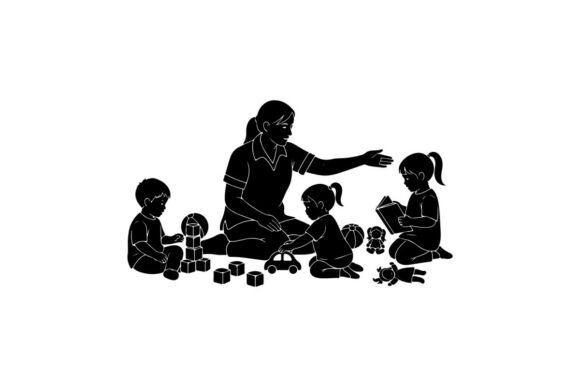
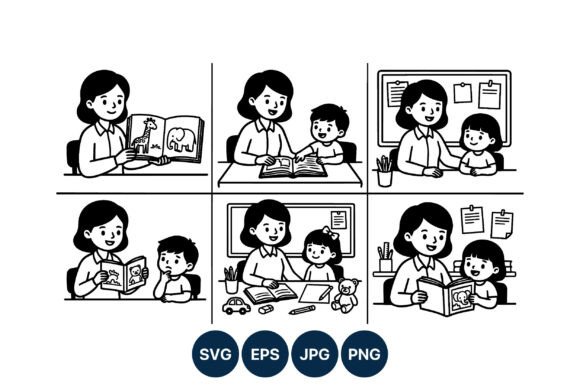
There is a quiet warmth to this design that hits you before you even think about thread colors or stitch types. The black and white line art of a female teacher reading animal picture books to young children lands somewhere between nostalgic and tender. It is not trying to be flashy. The classroom setting, the bulletin board, the scattered school supplies, the way the children lean in toward the book, all of it creates a small narrative moment rather than a generic decorative motif. That matters more than most people realize when you are choosing a design for a product someone will actually pay for or gift to someone they love.
As an embroidery designer who has tested hundreds of graphics on fabric, my first instinct when I opened this file was that it would translate beautifully to projects tied to education, early childhood, teacher appreciation, and literacy themes. The composition feels balanced without being stiff. The line work has enough detail to feel intentional but not so much that it would turn into a muddy mess under thread. That sweet spot is hard to find in digital design assets, and this one lands in it comfortably.
The Real Test: Imagining It on a Finished Product
I always run a mental test when I review an embroidery design. I picture it on a specific item, in a specific context, being used by a specific person. For Teacher Reading Animal Book to Children, the image that came to mind immediately was a natural canvas tote bag, maybe 12 by 14 inches, with the design stitched in a warm charcoal or deep navy thread. I imagined it as an end-of-year gift for a kindergarten teacher, the kind of personalized present that actually gets used at the farmers market or the library, not tucked away in a closet.
That scenario matters because it tells me the design has giftability. The scene feels universal enough to appeal to a wide range of customers, yet specific enough to feel thoughtfully chosen. A parent buying this on a handmade tote from an Etsy seller would not hesitate because the design does not look like clip art. It looks like a small illustration with heart. That is the difference between a product that sells once and one that generates repeat customers and word-of-mouth referrals.
Where This Design Naturally Belongs
After stitching out a few test samples on different substrates, I can confidently say this design finds its sweet spot on products that celebrate learning, childhood, and caregiving. Here are the applications where it truly shines:
- Teacher appreciation gifts: Tote bags, aprons, pillow covers, and tea towels with this design feel personal without being overly sentimental.
- Nursery and playroom decor: Framed embroidery hoops or small wall hangings work beautifully in a child's reading nook.
- Children's apparel: A small version on a sweatshirt or a denim jacket pocket adds a handmade touch that parents love.
- Library or bookshop merchandise: If you sell at craft fairs or run a small shop, this design on canvas pouches or book bags is an easy seller.
- Baby shower gifts: A soft blanket corner or a bib with this design whispers thoughtful rather than loud.
The classroom elements, the bulletin board, the stack of animal picture books, all of it speaks directly to early childhood educators, librarians, reading specialists, and parents of young children. That is a niche with real buying power and emotional investment. When you align a design with a community that cares deeply about its subject matter, you are not just selling a product. You are offering something that feels like it belongs to them.
How the Line Art Translates to Stitch
Black and white line art presents a unique set of considerations for machine embroidery. The good news with Teacher Reading Animal Book to Children is that the lines are clean and the shapes are defined without being overly intricate. The figures of the teacher and children have enough separation that you will not lose facial features or hand gestures when the design runs at a moderate size. The animal picture books are suggested with simple shapes, which means the thread will not struggle to render tiny details that would frustrate both the stitcher and the eventual buyer.
That said, this is not a design you want to shrink down to fit a two-inch hoop and expect miracles. The classroom setting includes a bulletin board and school supplies, and those background elements, while charming, need breathing room. I would recommend keeping the design at least four inches in its smallest dimension. Anything smaller, and you risk losing the bulletin board details and the spatial relationship between the teacher and the children. The scene needs that classroom context to read clearly. Take it away, and the design loses its narrative.
Fabric and Stabilizer Realities
Let me be straightforward about where this design works and where it demands extra care. On medium-weight cotton, linen, canvas, and quality poly-cotton blends, the stitch definition holds up nicely. The line art style means you will likely rely on a running stitch or a light satin stitch approach, and those techniques reward stable, non-stretchy fabrics.
On stretchy fabrics like jersey knit or performance wear, you will need a sharp game plan. A good cutaway stabilizer is non-negotiable here. I also recommend testing on scrap fabric before committing to a final garment. The classroom scene includes enough directional lines and small shapes that any fabric shifting during stitching will show immediately. On textured fabrics like terry cloth or waffle weave, the design may fight against the surface. I would reserve those for simpler, bolder motifs and give this one the smooth canvas it deserves.
Dark fabrics are another consideration. The black and white line art is designed with contrast in mind, but if you stitch it in dark thread on a dark background, the scene will recede into obscurity. Test thread colors against your fabric under natural light. A soft gray, warm taupe, or even a muted gold can bring out the illustration quality without screaming for attention.
Commercial Use and the Small Business Perspective
I review designs from the standpoint of someone who thinks about customer perception, product value, and brand consistency. Teacher Reading Animal Book to Children belongs to the Illustrations category and is offered as a Graphics product type. That means it likely started as a digital illustration, and the embroidery designer will need to digitize it or use it as a design asset in their workflow. Before you list a finished product anywhere, confirm the commercial licensing terms. This is not a step to skip. If you plan to sell embroidered sweatshirts, tote bags, or patches on Etsy or at craft fairs, you need to know whether the license covers finished physical products, digital embroidery files, or both.
From a branding perspective, this design carries a gentle, storybook quality that elevates a handmade product line. If your shop focuses on literacy-themed gifts, teacher appreciation items, or nursery decor, this design fits like a missing puzzle piece. It gives your product listings a cohesive visual identity. Customers browsing your shop will notice the consistency, and that builds trust faster than any marketing copy ever could.
What Buyers Will Notice and What They Will Miss
Customers may not be able to articulate why they prefer one embroidered tote over another, but they feel it. A design like Teacher Reading Animal Book to Children offers a quiet professionalism that mass-produced graphics lack. The composition feels like someone drew it with care, not like it was generated in thirty seconds. The teacher's posture, the way the children gather around the book, the bulletin board in the background, all of these details register on a subconscious level. Buyers perceive the product as more valuable, more giftable, and more worth the price.
What customers will miss, and what you as the maker need to watch for, are the small technical trouble spots. The school supplies scattered around the scene add charm, but if your stitch density is too high in those areas, the fabric can pucker. The bulletin board may have tiny elements that look fine in a digital preview but need careful digitizing to translate cleanly to thread. Always inspect the design at actual size before running it on a final product. A quick test on scrap fabric with your chosen stabilizer and thread will save you from wasting a good blank and disappointing a customer.
Practical Designer Notes Before You Stitch
Here is the checklist I run through every time I work with a new illustration-based embroidery design. It applies directly to this one:
- Check your hoop size. Do not assume the design will fit. Measure the stitch area and confirm your hoop can accommodate it with comfortable margins.
- Review stitch density. Line art can become dense quickly if the lines are thick or closely spaced. Look for areas where the thread may build up and cause stiffness.
- Test thread color contrast. The design arrives as black and white line art. Your thread choice defines the entire mood. Soft neutrals, muted earth tones, or classic navy each tell a different story.
- Compare light and dark backgrounds. Stitch a small section on both a light and a dark fabric scrap. The same design can look completely different, and you want to know which version your customers will receive.
- Inspect small details. The bulletin board, the animal picture books, the children's faces. Zoom in. Make sure nothing disappears or blurs at your intended stitch size.
- Use proper stabilizer. I cannot say this enough. Your stabilizer choice makes or breaks the final product. Match it to your fabric weight and stretch level.
- Confirm licensing. Before selling finished items or digital embroidery files, know what the license allows. Do not guess.
When This Design Is the Right Choice
There are moments in a small business when you need a design that does not just fill space. You need something that connects. Teacher Reading Animal Book to Children is that kind of design. It works for a teacher retiring after twenty years. It works for a baby shower where the parents are both book lovers. It works for a library fundraiser, a literacy nonprofit event, or a boutique children's clothing line. The versatility is quiet but real.
On a sweatshirt, it feels cozy and approachable. On a canvas tote, it feels literary and thoughtful. On a nursery pillow, it feels like the start of a bedtime routine. The classroom setting, the animal picture books, the bulletin board, the school supplies, all of these elements stitch together a scene that feels lived-in and warm. That is not easy to achieve in a digital embroidery file, and when you find one that does it, you hold onto it.
I would not hesitate to build a small collection around this design, maybe pairing it with coordinating book-themed motifs or alphabet accents. It gives you room to grow a product line without boxing you into a single season or trend. Teachers are appreciated year-round. Babies are born every month. Books never go out of style. This design taps into something lasting, and that is the kind of asset a craft business can rely on.
Take the time to test it properly. Choose your thread colors with intention. Respect the line art for what it is, a gentle illustration that deserves a gentle hand in the digitizing and stitching process. Do that, and you will have a finished product that feels less like merchandise and more like a small, stitched piece of storytelling.