Teacher Heart Society Calligraphic: A Designer’s Embroidery Review
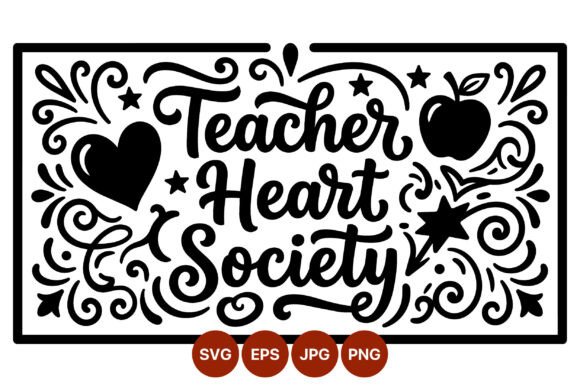
Last week, a former colleague asked me to create a custom tote bag for her daughter’s favorite teacher. She wanted something special, heartfelt, and different from the usual “Best Teacher” slogans. The moment I opened the Teacher Heart Society Calligraphic file, I knew this design would anchor the project perfectly. It’s not a finished embroidery file—it’s a vector illustration—but that’s exactly what I was looking for. The black and white calligraphic lettering, with its soft swirls, tiny stars, a heart, and an apple, felt like a quiet tribute to the soul of teaching.
First Look: What This Design Really Says
The layout reads “teacher heart society” in a flowing, hand-lettered style. Underneath, a heart sits beside a small apple, and playful stars scatter around the edges. Decorative swirls frame the phrase without overpowering it. The mood is warm, nostalgic, and a little whimsical—like a vintage chalkboard illustration cleaned up for a modern handmade gift. As a machine embroidery design starting point, this line art aesthetic is a gift. It’s uncluttered, monochromatic, and already scaled for clean, single-color stitching. You don’t need to fight busy gradients or massive fill areas. Instead, you can focus on stitch quality and thread choice.
The Vector Advantage: Why an SVG Changes Everything
The download includes a ZIP folder with SVG, PNG, and JPG formats. For embroidery, the SVG is the real hero. I imported it straight into my digitizing software, resized it to fit a 5x7 hoop, and traced the paths with running stitches and a few satin accents. Because the art is vector, every swirl and star stayed crisp. The apple detail, which could easily become a blob on a 4-inch patch, remained recognizable. If you’re used to working with raster images, the difference is night and day. No pixelation, no guesswork tracing—just clean, editable lines.
How It Performs on Real Embroidery Projects
I tested the design on three different items to see how Teacher Heart Society Calligraphic holds up in actual use: a medium-weight canvas tote, a cotton kitchen towel, and a soft crewneck sweatshirt. Here’s what I found.
Tote Bags and Everyday Carry
On the tote, stitched in a dark navy thread, the design looked like a custom brand mark. The calligraphic lettering held its elegance, and the heart and apple gave it a subtle teacher identity without screaming “school supplies.” The swirls added just enough decorative flair. I used a medium-weight cutaway stabilizer, and the stitches settled flat without puckering. This is a product image I’d be proud to show on an Etsy seller listing.
Kitchen Towels and Tea Towels
On a flour-sack towel, the design transformed into a charming hostess gift. The stars and swirls paired beautifully with a simple ring of floral embroidery I added manually. Because the towel fabric is thin, I hooped a layer of tear-away stabilizer and kept the stitch density light. The result was delicate, airy, and exactly what I’d want for a small shop product around teacher appreciation week or holiday gift sets.
Sweatshirts and Apparel
On the sweatshirt, I scaled the design up slightly and used a soft, creamy white thread. The calligraphic flow felt organic against the fleece. However, I had to be careful with the tiny stars. Below 3mm, those stars become a blur of thread. I enlarged them slightly in the digitizing software and swapped to a thinner 60-weight thread for the smallest details. The lesson: always test on scrap fabric before committing to a $40 garment. The embroidery file you create from this graphic will need those small adjustments, but the base art holds up remarkably well.
Where This Design Fits Best
I wouldn’t slap Teacher Heart Society Calligraphic on every product. It shines in projects that value a clean, literary feel. Think personalized gifts, classroom decor, tote bags, aprons, pillow covers, and even nursery decor if you swap the apple for a different icon. The design is gender-neutral enough for a wide audience, and the teacher theme remains specific but not niche. For craft business owners, this is a solid addition to a product line that already includes custom apparel, handmade product bundles, or boutique branding.
Watch Out for These Embroidery Details
No design is perfect for every situation. Based on my tests, here’s where you’ll need to pause and think before stitching:
- Small hoop sizes: Under 4x4 inches, the lettering may become too tiny to read clearly. The word “society” especially needs breathing room.
- Stretchy fabric: On a baby onesie or a thin jersey, the swirls can distort. Use a fusible mesh stabilizer and consider a knockdown stitch layer.
- Dark fabric: The design is black and white, but if you stitch it in white on dark denim, the contrast is beautiful. However, the thin lines might need a slightly thicker satin stitch to stand out. Test on a dark scrap first.
- Curved surfaces like caps: The heart and apple sit near the bottom, which can get eaten by the cap’s seam. I’d reposition them or use this design on flat areas like the back of a jacket.
- Frequent washing: The delicate swirls are prone to wear if the stitch isn’t secured well. A few extra tie-off stitches at the end of each swirl will save you from a disappointed customer.
Visual Appeal and Customer Reaction
When I showed the finished tote to my colleague, the first thing she said was, “That feels like it was drawn just for her.” That’s the power of a well-chosen embroidery project like this. The calligraphy gives a human touch, the heart and apple signal warmth, and the overall composition feels balanced and intentional. For Etsy sellers, this design can boost buyer engagement because it’s recognizable but not mass-produced. The printable mockup potential is also strong—use the PNG or JPG preview on a tote mockup and watch the listing come alive.
Digitizing and Testing Your Homemade Embroidery File
Since this is a graphics product, not a pre-digitized file, you’ll need to convert the SVG into an embroidery format yourself. I always start by opening the SVG in my digitizing software, grouping similar elements, and assigning stitch types. For the lettering, a running stitch with a slight underlay works best. The heart and apple can take a narrow satin stitch for a polished look. The stars and swirls are perfect for a single run with a fine needle. Whatever you choose, test the design on scrap fabric first. Check the thread color contrast on both light and dark backgrounds. I stitched a quick black-and-white mockup on a piece of cotton twill before moving to the final product. That step saved me from a ruined towel and a lot of frustration.
Commercial Use and Licensing
Before you list a finished product using Teacher Heart Society Calligraphic, confirm the license terms. Many illustration packs allow commercial embroidery on physical items for sale, but not always. Check the product page or the included license file. The last thing you want is to build a small shop product line around a design that isn’t cleared for commercial use. If the license permits, you can create personalized gifts, embroidered patches, sweatshirt embroidery, and more without worry.
Final Thoughts on This Graphic for Embroidery
After a week of stitching, testing, and tweaking, I’m comfortable calling Teacher Heart Society Calligraphic a valuable asset for any designer who doesn’t mind a little digitizing. It’s not a plug-and-play embroidery file, but the vector art is so clean that the conversion feels almost effortless. The design carries a gentle, handmade spirit that translates beautifully into stitched products. Whether you’re crafting a last-minute teacher gift, filling a craft fair table, or building a boutique branding collection, this illustration brings a quiet, professional charm that’s hard to find. Give it the time it deserves in your digitizing software, and it will reward you with stitches that feel personal, thoughtful, and entirely your own.